Advanced AI Systems: Deep Learning, NLP, and Automation
Article Sidebar
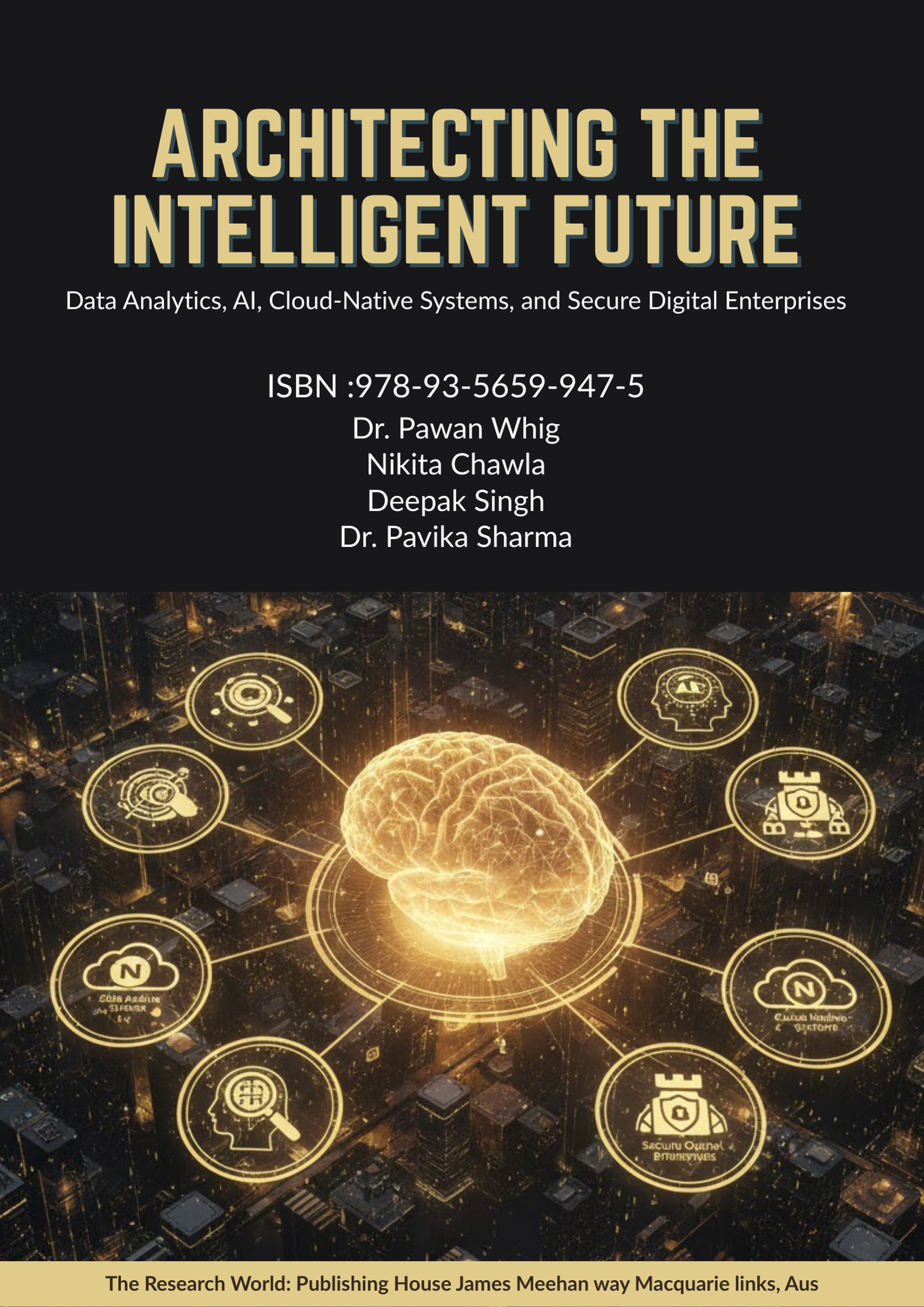
Main Article Content
Abstract
Advanced AI systems represent the next stage in the evolution of artificial intelligence, combining deep learning, natural
language processing, and intelligent automation to solve complex real-world problems. This chapter introduces the
foundations of advanced AI and explains how deep learning models enable machines to learn hierarchical representations from
large datasets. It explores the role of natural language processing in enabling machines to understand and generate human
language, and examines intelligent automation as a driver of efficiency and innovation. The chapter also highlights key
applications across industries, discusses ethical and technical challenges, and outlines future trends shaping the development
of advanced AI systems.
Article Details
References
Kaplan, A., & Haenlein, M. (2020). Rulers of the world, unite! The challenges and opportunities of artificial intelligence. Business Horizons, 63(1), 37–50.
Lu, Q., Zhu, L., Xu, X., Xing, Z., & Whittle, J. (2023). A reference architecture for designing foundation model-based systems. arXiv. https://arxiv.org/abs/2304.11090
Lu, Q., Zhu, L., Xu, X., Xing, Z., Harrer, S., & Whittle, J. (2023). Towards responsible generative AI: A reference architecture for designing foundation model-based agents. arXiv. https://arxiv.org/abs/2311.13148
McKinsey & Company. (2023). The economic potential of generative AI: The next productivity frontier.
Mitchell, M. (2019). Artificial intelligence: A guide for thinking humans. Farrar, Straus and Giroux.
Mutlu, O. (2020). Intelligent architectures for intelligent computing systems. arXiv. https://arxiv.org/abs/2012.12381
Nilsson, N. J. (2010). The quest for artificial intelligence. Cambridge University Press.
Norvig, P., & Russell, S. (2021). Artificial intelligence: A modern approach (4th ed.). Pearson.
OpenAI. (2023). GPT-4 technical report. arXiv. https://arxiv.org/abs/2303.08774
Porter, M. E., & Heppelmann, J. E. (2014). How smart, connected products are transforming competition. Harvard Business Review, 92(11), 64–88.
Schwab, K. (2017). The fourth industrial revolution. Crown Business.
Shneiderman, B. (2022). Human-centered AI. Oxford University Press.
Simon, H. A. (1996). The sciences of the artificial (3rd ed.). MIT Press.
Topol, E. (2019). Deep medicine: How artificial intelligence can make healthcare human again. Basic Books.
World Economic Forum. (2023). The future of jobs report 2023.
Genkin, M., & McArthur, J. J. (2022). B-SMART: A reference architecture for artificially intelligent autonomic smart buildings. arXiv. https://arxiv.org/abs/2211.03219
Wooldridge, M. (2021). A brief history of artificial intelligence: What it is, where we are, and where we are going. Flatiron Books.
Seknametla, P. R., & Sunkara, R. (2024). Threat Modeling Integration in DevSecOps Pipelines: Early-Stage Security Risk Identification Using Shift-Left Approaches. International Journal of Emerging Research in Engineering and Technology, 5(1), 126-133
Gantikota, S. (2023). Integrating SonarQube and IBM AppScan into Enterprise CI/CD Pipelines: A Vulnerability Mitigation Framework Achieving Over Eighty Percent Risk Reduction. International Journal of Emerging Trends in Computer Science and Information Technology, 4(3), 240-244.
Sunkara, R. (2024). Hardware-in-the-Loop Power Profiling Automation for Consumer Streaming Devices: A Multi-Lab Framework for Regulatory Compliance Validation. International Journal of Emerging Trends in Computer Science and Information Technology, 5(4), 187-191.
Brahmandam, L. M. K. (2023). A Comparative Empirical Study of Messaging Primitives for Enterprise-Scale Event-Driven Microservices: EventBridge, SQS, SNS, and Apache Kafka under a Unified Decision Framework. International Journal of Emerging Research in Engineering and Technology, 4(3), 151-159.