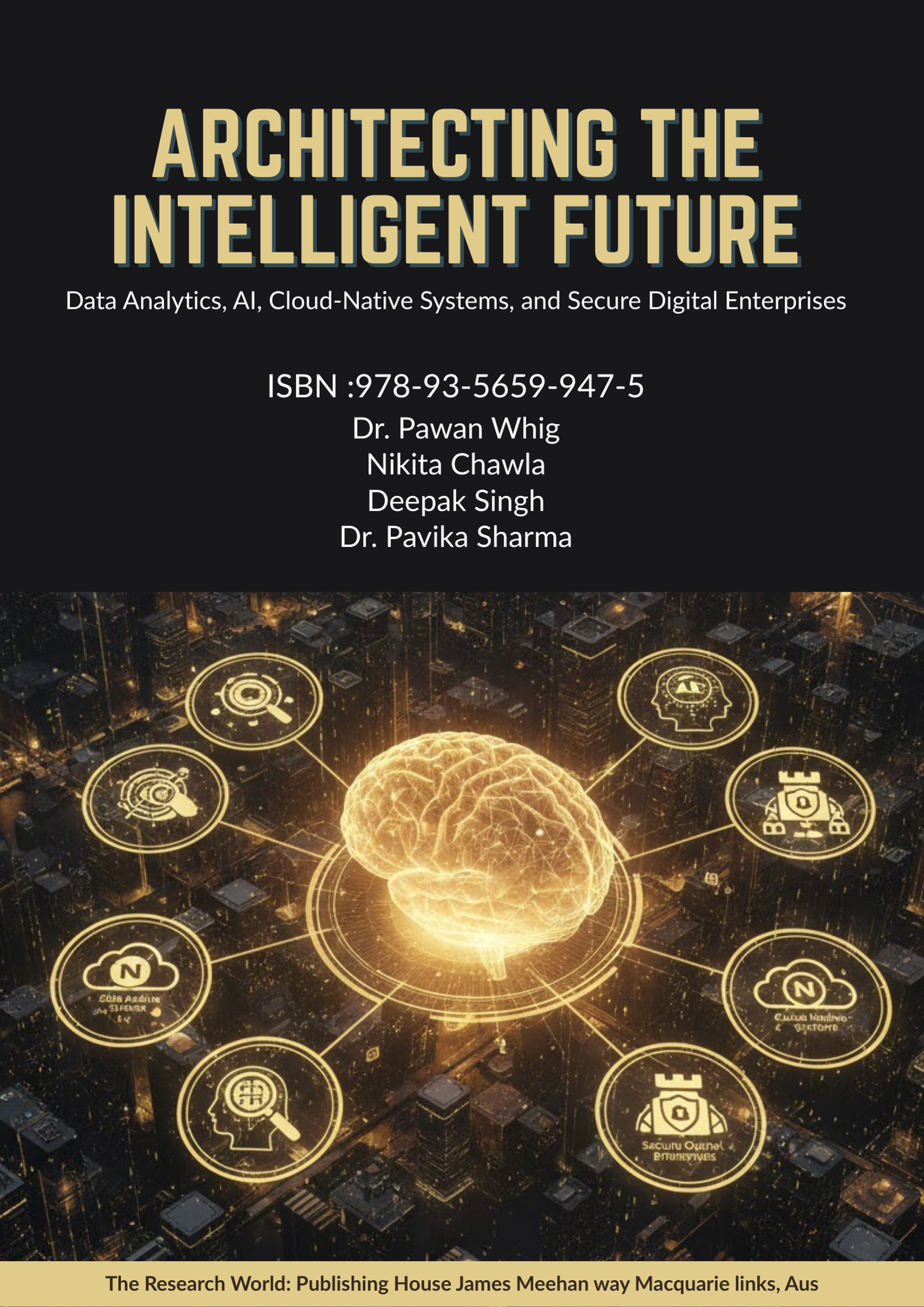
The rapid convergence of data analytics, artificial intelligence, cloud-native systems, and secure digital technologies is redefining how modern enterprises operate, innovate, and compete. Organizations today are no longer driven solely by scale or automation; they are shaped by intelligence, agility, trust, and responsible use of technology. This book, Architecting the Intelligent Future, is conceived to serve as a comprehensive guide to this transformation, bringing together foundational concepts, advanced architectures, and real-world applications that collectively define intelligent digital enterprises.
The journey begins with an exploration of how technology convergence is reshaping enterprises, highlighting the integration of data, AI, cloud platforms, and security as a unified strategic capability rather than isolated technical domains. As data becomes the backbone of decision-making, the book delves into modern data analytics and architectures, addressing how organizations can design scalable, resilient, and insight-driven data ecosystems. Emphasis is placed on real-time and big data systems that enable timely, intelligent insights critical for dynamic business environments.
Artificial intelligence and machine learning form a central pillar of this work. Readers are introduced to core AI and ML principles before progressing to advanced systems such as deep learning, natural language processing, and intelligent automation. These chapters bridge theory and practice, helping readers understand not only how AI works but how it can be effectively embedded into enterprise systems to drive innovation and efficiency.
Cloud computing and cloud-native architectures are presented as enablers of scalability, flexibility, and rapid innovation. The book discusses modern architectural paradigms including microservices, containers, and platform engineering, illustrating how enterprises can build systems that are modular, resilient, and ready for continuous evolution. Alongside this, DevOps and agile delivery models are examined as essential practices for achieving speed, quality, and scalability in software and system development.
Security, trust, and compliance are treated as first-class concerns throughout the enterprise architecture. Dedicated discussions on cybersecurity architecture, data privacy, governance, and regulatory compliance reflect the growing importance of protecting digital assets, ensuring ethical data usage, and maintaining stakeholder trust in an increasingly regulated and threat-prone digital landscape.
The book also highlights sector-specific applications, demonstrating how AI and analytics are transforming domains such as finance, fintech, and healthcare. These examples showcase the tangible impact of intelligent systems on operational efficiency, risk management, personalization, and societal outcomes. The concluding perspective looks toward ethical AI, responsible innovation, and the future trajectory of intelligent enterprises, emphasizing the need to balance technological advancement with transparency, fairness, and human values.
Architecting the Intelligent Future is intended for researchers, industry professionals, architects, policymakers, and advanced students who seek a holistic understanding of intelligent enterprise systems. By combining conceptual clarity with architectural insights and practical relevance, this book aims to equip readers to design, build, and govern digital enterprises that are intelligent, secure, and sustainable in the years to come.
Published: 2026-06-28