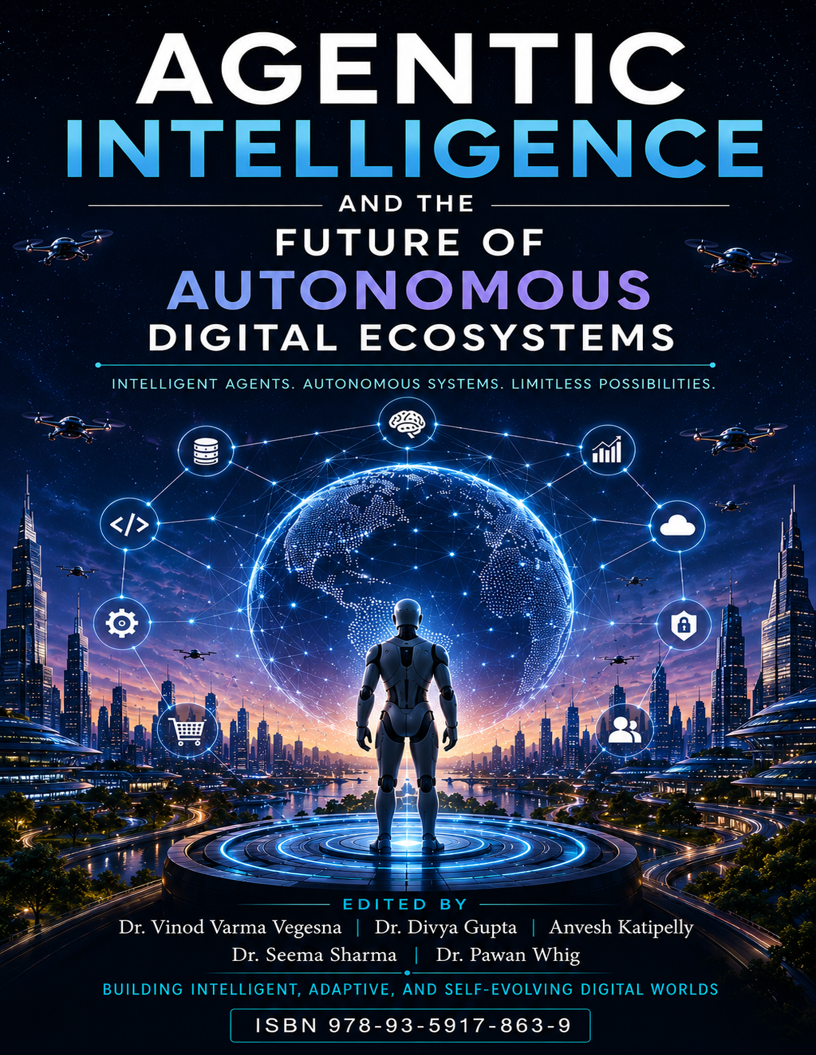
The Future of Autonomous Digital Ecosystems
Article Sidebar
Main Article Content
Abstract
The future of autonomous digital ecosystems represents one of the most transformative and consequential technological frontiers of the twenty-first century. As artificial intelligence, machine learning, distributed computing, the Internet of Things, and blockchain technologies converge with unprecedented velocity, they are giving rise to a new class of self-governing, self-evolving, and self-sustaining digital environments that operate with minimal human intervention. These autonomous digital ecosystems encompass a vast spectrum of interrelated systems—from intelligent agent networks and decentralized autonomous organizations to AI-driven virtual economies and self-healing cyber-physical infrastructures—all characterized by their capacity for adaptive behavior, emergent complexity, and autonomous decision-making in response to dynamic environmental conditions. Unlike earlier generations of digital systems that required constant human authorship, maintenance, and governance, autonomous digital ecosystems leverage reinforcement learning, generative AI, and multi-agent coordination protocols to evolve their own rules, structures, and operational strategies in pursuit of defined objectives. The theoretical underpinnings of this paradigm draw from complexity science, cybernetics, distributed systems theory, and cognitive computing, while practical implementations span industrial automation, smart urban infrastructure, digital finance, healthcare informatics, and immersive virtual societies. This chapter provides a comprehensive examination of the conceptual foundations, architectural methodologies, real-world applications, and critical challenges associated with autonomous digital ecosystems. Through detailed case studies drawn from leading global implementations, the chapter illustrates how organizations across sectors are harnessing autonomous digital infrastructure to achieve levels of efficiency, resilience, and adaptability previously unattainable with human-managed systems. The methodology section presents the layered technical frameworks—including cyber-physical system integration, federated AI architectures, and decentralized governance protocols—that underpin the design and deployment of these systems. Critically, the chapter also engages with the profound challenges and limitations that autonomous digital ecosystems present: from cybersecurity vulnerabilities and algorithmic opacity to regulatory voids, digital equity disparities, and the existential governance questions raised when autonomous systems acquire the capacity to modify their own objectives. The chapter concludes by projecting forward to the near and medium-term futures of autonomous digital civilization, outlining a research and policy agenda that balances technological ambition with ethical responsibility, ensuring that the extraordinary potential of autonomous digital ecosystems serves humanity equitably and sustainably across cultural, economic, and geographic boundaries.