The rapid evolution of Artificial Intelligence (AI) is reshaping the foundations of modern society, transforming how individuals, organizations, and governments interact with technology. Among the most significant developments in this transformative journey is the emergence of Agentic Intelligence—a paradigm that empowers AI systems to act autonomously, make context-aware decisions, collaborate with other intelligent agents, and continuously adapt to dynamic environments. As digital ecosystems become increasingly interconnected, the convergence of autonomous agents, advanced machine learning, distributed computing, and intelligent automation is paving the way for a new era of self-organizing and self-evolving digital infrastructures.
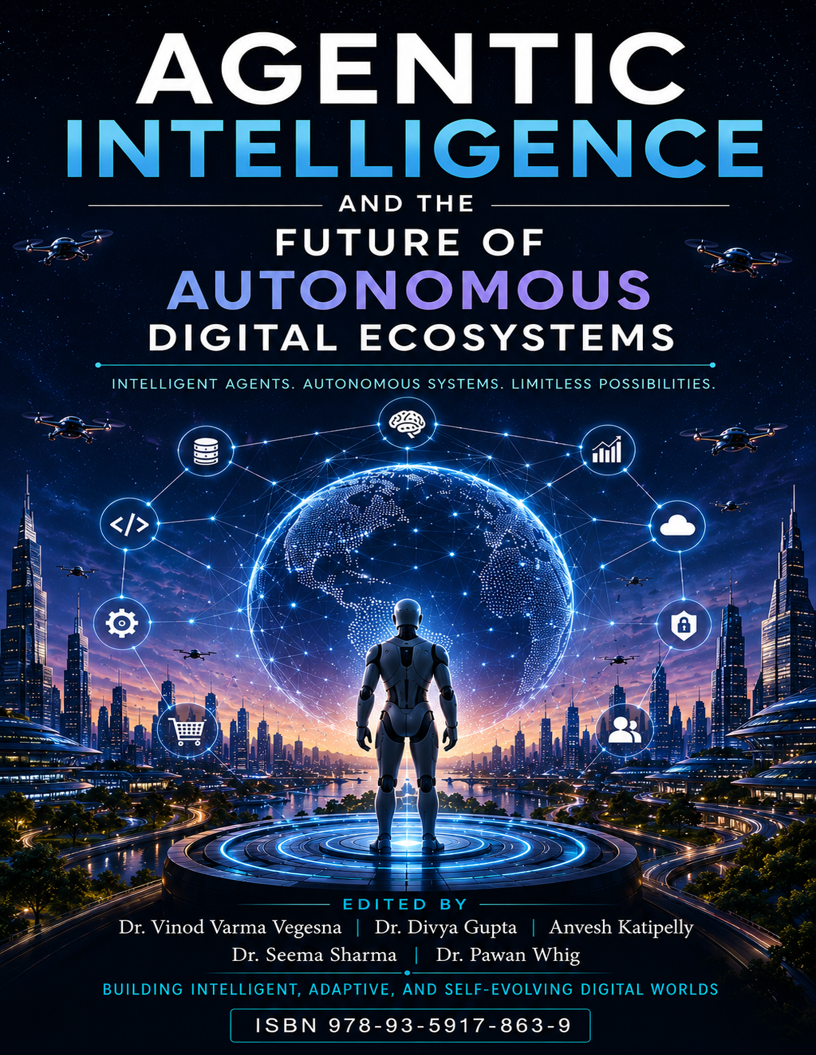
Agentic Intelligence and the Future of Autonomous Digital Ecosystems explores this groundbreaking frontier, bringing together diverse perspectives from researchers, academicians, industry practitioners, and technology innovators. The chapters in this volume examine the theoretical foundations, technological advancements, practical applications, ethical considerations, and future trajectories of agentic systems that are redefining the digital landscape.
The concept of Agentic Intelligence extends beyond conventional AI models by emphasizing autonomy, goal-oriented behavior, adaptability, collaboration, and proactive decision-making. These intelligent agents possess the ability to perceive their environment, reason about complex situations, learn from experiences, and interact with humans and machines to achieve desired outcomes. Such capabilities are becoming increasingly essential in domains including smart cities, healthcare, cybersecurity, finance, education, industrial automation, digital governance, and autonomous transportation.
This book highlights how autonomous digital ecosystems are emerging as interconnected networks of intelligent agents capable of coordinating activities, optimizing resources, and responding to real-time challenges with minimal human intervention. These ecosystems represent a significant shift from static digital systems toward adaptive environments that can continuously evolve, innovate, and self-regulate.
While the opportunities presented by Agentic Intelligence are immense, they also raise critical questions regarding trust, transparency, accountability, privacy, security, and ethical governance. Several chapters in this volume address these challenges, offering frameworks and strategies to ensure that autonomous systems remain aligned with human values and societal goals. The discussions presented herein emphasize the importance of responsible innovation and multidisciplinary collaboration in shaping the future of intelligent digital ecosystems.
This book would not have been possible without the valuable contributions of the authors, reviewers, and scholars who generously shared their expertise and insights. We extend our sincere gratitude to all contributors whose research and dedication have enriched this volume. We also thank the publishing team for their support and commitment throughout the development of this work.
We hope that this book serves as a valuable resource for researchers, educators, students, policymakers, technology professionals, and anyone interested in understanding the transformative potential of Agentic Intelligence. As we stand at the threshold of a future where autonomous digital ecosystems become integral to everyday life, it is our aspiration that the ideas presented in this book will inspire further research, innovation, and thoughtful dialogue.
The future of intelligent systems is not merely about automation—it is about creating adaptive, collaborative, and trustworthy digital ecosystems that augment human capabilities and contribute to a more connected, efficient, and sustainable world.
Editors
Current Issue
Vol. 1 No. 1 (2026): Agentic Intelligence and the Future of Autonomous Digital Ecosystems
The rapid evolution of Artificial Intelligence (AI) is reshaping the foundations of modern society, transforming how individuals, organizations, and governments interact with technology. Among the most significant developments in this transformative journey is the emergence of Agentic Intelligence—a paradigm that empowers AI systems to act autonomously, make context-aware decisions, collaborate with other intelligent agents, and continuously adapt to dynamic environments. As digital ecosystems become increasingly interconnected, the convergence of autonomous agents, advanced machine learning, distributed computing, and intelligent automation is paving the way for a new era of self-organizing and self-evolving digital infrastructures.
Agentic Intelligence and the Future of Autonomous Digital Ecosystems explores this groundbreaking frontier, bringing together diverse perspectives from researchers, academicians, industry practitioners, and technology innovators. The chapters in this volume examine the theoretical foundations, technological advancements, practical applications, ethical considerations, and future trajectories of agentic systems that are redefining the digital landscape.
The concept of Agentic Intelligence extends beyond conventional AI models by emphasizing autonomy, goal-oriented behavior, adaptability, collaboration, and proactive decision-making. These intelligent agents possess the ability to perceive their environment, reason about complex situations, learn from experiences, and interact with humans and machines to achieve desired outcomes. Such capabilities are becoming increasingly essential in domains including smart cities, healthcare, cybersecurity, finance, education, industrial automation, digital governance, and autonomous transportation.
This book highlights how autonomous digital ecosystems are emerging as interconnected networks of intelligent agents capable of coordinating activities, optimizing resources, and responding to real-time challenges with minimal human intervention. These ecosystems represent a significant shift from static digital systems toward adaptive environments that can continuously evolve, innovate, and self-regulate.
While the opportunities presented by Agentic Intelligence are immense, they also raise critical questions regarding trust, transparency, accountability, privacy, security, and ethical governance. Several chapters in this volume address these challenges, offering frameworks and strategies to ensure that autonomous systems remain aligned with human values and societal goals. The discussions presented herein emphasize the importance of responsible innovation and multidisciplinary collaboration in shaping the future of intelligent digital ecosystems.
This book would not have been possible without the valuable contributions of the authors, reviewers, and scholars who generously shared their expertise and insights. We extend our sincere gratitude to all contributors whose research and dedication have enriched this volume. We also thank the publishing team for their support and commitment throughout the development of this work.
We hope that this book serves as a valuable resource for researchers, educators, students, policymakers, technology professionals, and anyone interested in understanding the transformative potential of Agentic Intelligence. As we stand at the threshold of a future where autonomous digital ecosystems become integral to everyday life, it is our aspiration that the ideas presented in this book will inspire further research, innovation, and thoughtful dialogue.
The future of intelligent systems is not merely about automation—it is about creating adaptive, collaborative, and trustworthy digital ecosystems that augment human capabilities and contribute to a more connected, efficient, and sustainable world.
Editors
Published: 2026-07-13