BUILDING AGENTIC SYSTEMS – A PRACTICAL GUIDE
Article Sidebar
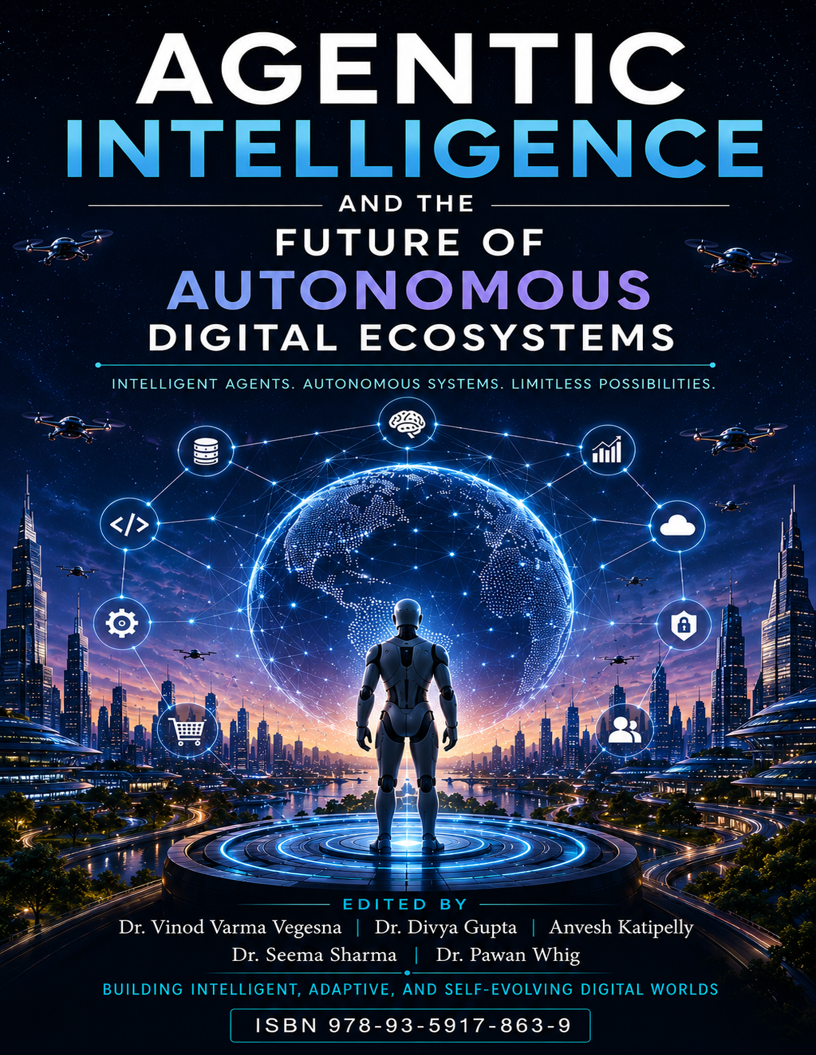
Main Article Content
Abstract
The construction of agentic artificial intelligence systems — autonomous software architectures that perceive dynamic environments, formulate multi-step plans, invoke heterogeneous tool ecosystems, maintain persistent memory across interaction sequences, and execute consequential actions with minimal human intervention at each step — represents the most technically demanding and strategically consequential frontier of contemporary enterprise AI engineering. This chapter provides a rigorous, practitioner-oriented synthesis of the architectural principles, implementation frameworks, safety governance mechanisms, and operational management practices required to build, deploy, and sustain agentic AI systems across the diverse organisational contexts in which they are increasingly being deployed. Drawing upon primary case study evidence from four institutional deployments spanning a global e-commerce platform, a multinational financial services group, a leading legal technology firm, and a cloud AI infrastructure provider, and evaluated against a validated eight-dimensional Agentic System Implementation Framework, the chapter establishes that the most consequential determinants of agentic system success are not foundational model capability alone but the architectural design quality of the agent orchestration layer, the robustness of tool integration and error handling architecture, the sophistication of memory and state management systems, and the completeness of safety and alignment governance frameworks that constrain autonomous agent action within organisationally and ethically acceptable boundaries. The chapter identifies orchestration complexity, safety alignment at scale, tool integration reliability, memory coherence across long-horizon tasks, observability and debugging infrastructure, and latency and cost management as the six principal engineering and governance challenges that agentic system builders must address systematically. Practical implementation frameworks, architectural patterns, safety governance models, and programme management methodologies derived from the case study evidence provide AI engineers, system architects, product managers, and governance professionals with actionable guidance whose empirical grounding in documented agentic system deployments distinguishes it from the theoretical agent architecture literature that currently dominates academic and practitioner discourse on this rapidly evolving subject.